
Story by Bahari Duniya | Written by Ranjan Sharma
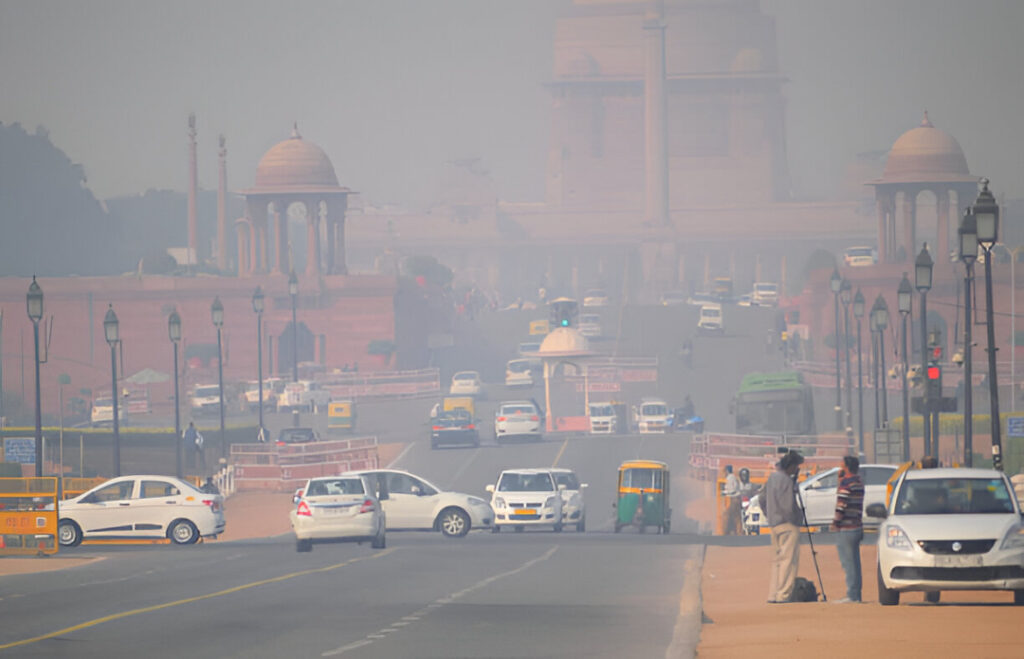
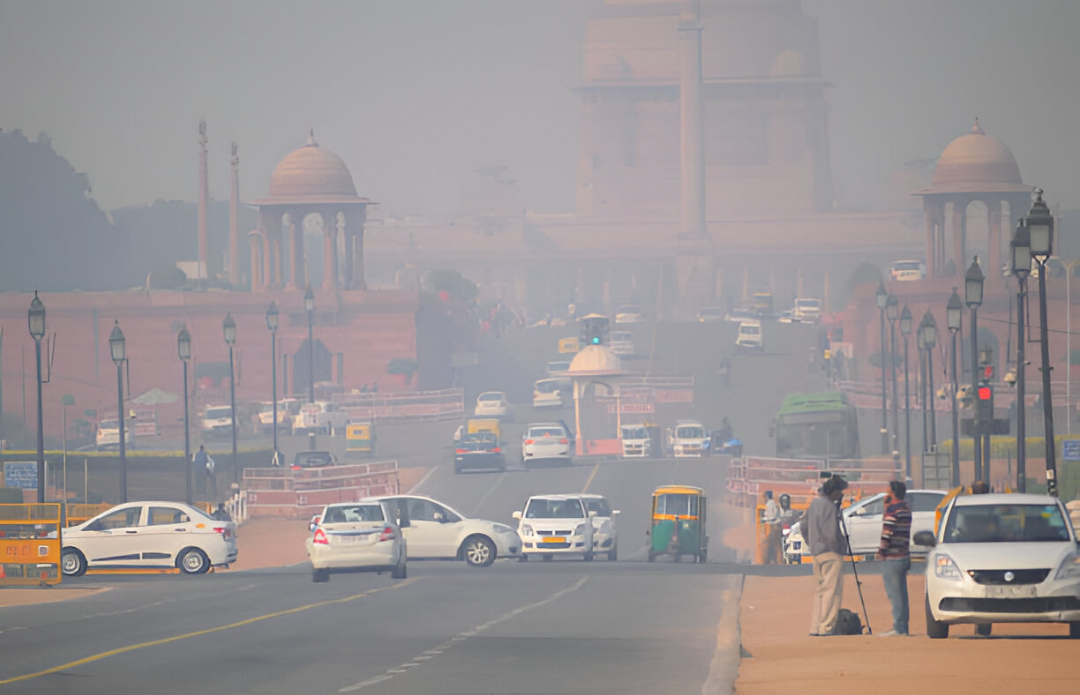
Every winter, Delhi chokes under a familiar haze. Hospitals issue warnings, schools close, and public frustration spikes briefly. The debate is predictable: vehicles, stubble burning, or industry? Yet the smog persists. The real issue is systemic—a failure of urban planning, governance, and enforcement. Without clear policy action and accountable institutions, citizens continue to breathe toxic air year after year.
Civic initiatives are trying to fill the gaps, yet one truth is often overlooked: air pollution is not just a personal habit or a tech problem. It stems from decades of fragmented urban planning, weak enforcement, and misplaced priorities. Delhi’s air remains unhealthy year-round. Seasonal winds worsen it, but the root causes—private vehicles, industry, and construction—are structural and persistent.
Construction dust, road work, and coal-fired power plants add heavily to Delhi’s pollution, while household emissions, small industries, and biomass burning worsen it. Stubble burning, though brief, draws outsized attention, letting deeper issues—urban mobility, industrial regulation, land use—languish. Even with nearly ₹19,700 crore under the National Clean Air Programme, much remains unspent or goes to cosmetic fixes, leaving structural causes largely unaddressed.
The deeper challenge lies in weak institutions. Pollution control boards are underfunded, understaffed, and lack enforcement power. Urban planning bodies have little legal authority, while transport, housing, environment, and land-use agencies operate in isolation. Without empowered, coordinated institutions, even carefully designed policies fail to translate into action, leaving Delhi’s air pollution a persistent, systemic problem rather than a policy solvable by intent alone.
Policy incoherence compounds the problem. Restrictions on construction in ecologically sensitive zones coexist with permissions for large-scale development. Older vehicle bans are inconsistently enforced, even as the policy narrative increasingly centres on electric vehicles.
While electric vehicles help, they do not solve the core problem: swapping one car for another does little for congestion, emissions, or exposure. Cleaner cities reduce car dependence and treat pollution as a governance issue. International examples show that consistent investment, strict enforcement, industrial relocation, and integrated public transport—not quick fixes—are what yield lasting improvements.
A stronger response in India needs a clear sequence. Short-term priorities should focus on reducing exposure: strict enforcement at construction sites, penalties for non-compliant vehicles and industries, and demand-side measures like congestion pricing and rationalised parking fees. Targeted, enforceable actions can protect public health immediately while longer-term structural reforms take shape.
Revenues should be dedicated to strengthening public transport and last-mile connectivity. Long-term improvement depends on reducing private vehicle use through reliable transit, safe walking and cycling infrastructure, and low-emission zones near schools, hospitals, and dense areas. Industries and coal-based power plants that fail emission standards must be relocated beyond city limits to ensure structural, lasting reductions in air pollution.
Pollution control boards need funding, staff, and real enforcement power. Urban planning authorities require legal authority, while state and national bodies must coordinate to enforce environmental and mobility norms. Strong institutions are essential; without them, even well-designed policies fail to improve air quality.
A regional metropolitan transport authority can coordinate planning, pricing, and operations across all modes. Transparent, real-time air quality data should drive policy and accountability. Delhi’s air pollution is neither inevitable nor unsolvable, but requires integrated governance, empowered institutions, and sustained, evidence-based action.
Delhi’s air pollution results from policy choices—and can be reversed. Experts have long outlined solutions. Making clean air a national priority, empowering institutions, and committing to sustained reforms can transform the crisis into an opportunity to create healthier, more resilient, and liveable cities for the future.
Related Video: Delhi Pollution: Delhi NCR में Coldwave और Air Quality का डबल अटैक, होगी Rain | Mausam
Parul Sharma, urban planner and founder of Urbanatomy Lab and City Scanner, shares personal views on urban governance and air quality.