

Story by Harshit Uttam I Updted : 23 January 2026
On his 129th birth anniversary, India salutes Netaji Subhas Chandra Bose, whose memory evokes the many roads not taken.
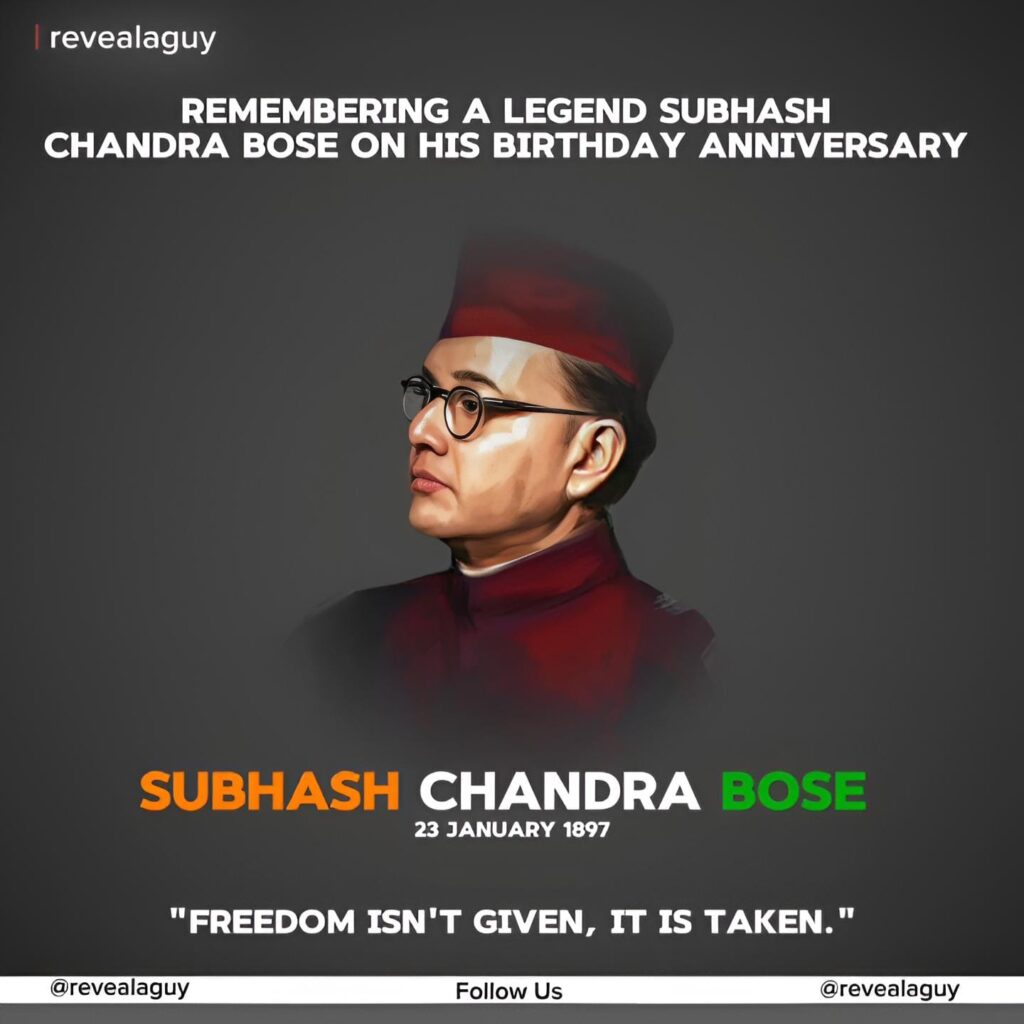
Subhas Chandra Bose was celebrated as a legend during his lifetime and transformed into a myth after his death, revered through imagination and memory. Yet his real-life actions offer enough to admire without embellishment. He stood as the ultimate Indian, refusing to attend a religious ceremony in Singapore’s Chettiar temple until all castes and communities were welcomed, and championed Hindustani (in Roman script) as a unifying national language.
Hoping to prove Bose’s betrayal, Auchinleck selected three INA officers—a Hindu, a Muslim, and a Sikh—for trial. The move backfired, as the trio embodied the secular solidarity of the INA’s cause. Gandhi praised this spirit of unity, and Bose reinforced it through collaboration with the Muslim League in Calcutta and his call for coalition governments in Bengal, Punjab, and Sind.
Bose’s most significant contribution to India was his vision of a non-sectarian future, essential for national survival. Yet his other feats—turning down the Civil Service, twice winning the Congress presidency, escaping house arrest, traveling in disguise to Germany and Japan, and raising an army in Singapore—cemented his populist appeal.
Bose’s actions refuted charges of Bengali timidity. His rivalry with Nehru and differences with Gandhi enhanced his stature among Bengalis seeking renewed pride. Few Indians worried about Japan’s possible victory, but Arthur Moore, editor of The Statesman, cautioned against Bose’s view that British imperialism was indistinguishable from German or Japanese ambitions.
Arthur Moore, after reading Bose’s The Indian Struggle, called it an “Indian Mein Kampf”—less vulgar but shaped by the same outlook, and lacking Indian identity. Yet concerns about fascist or authoritarian tendencies found little resonance among Indians.
Official indecision over the August 18, 1945 crash in Taiwan has sustained conspiracy theories and reported sightings, preserving hopes of Bose’s survival. The lack of a significant monument, however, may point to discomfort with the alternative political visions he represented for India’s struggle and its post-independence trajectory.
The public clings to Bose’s legacy precisely for the alternatives he symbolized—the fascination with unrealized possibilities. Netaji Subhas Chandra Bose stands as the adored Indian who never was, the custodian of a future that never materialized.
Stay updated with the latest news on BahariDuniya. Get all the trending City News, India News, Business News, and Sports News. For Entertainment News, TV News, and Lifestyle Tips, visit BahariDuniya.