
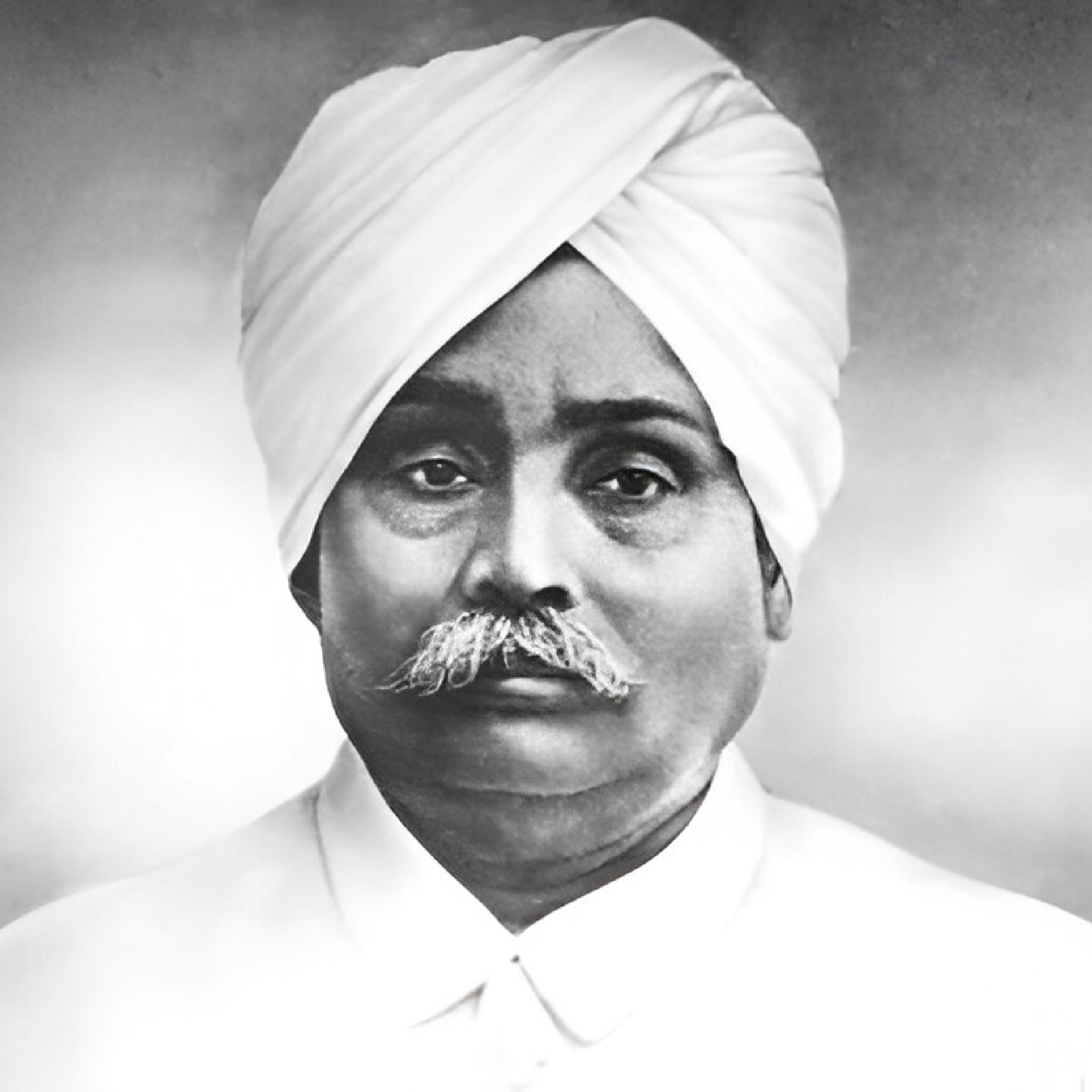
Story by Harshit Uttam I Updated : 28 January
Known as the ‘Lion of Punjab,’ Lala Lajpat Rai embodied courage and sacrifice during India’s freedom struggle. His story is not merely a chapter in history—it is a living reminder of how one person’s resolve can awaken a nation. In this FAQ-style piece, we explore his inspiring journey, his beliefs, and the legacy he left behind.

1. Who was Lala Lajpat Rai?
Born in Dhudike, Punjab, on January 28, 1865, Lala Lajpat Rai rose to become one of India’s fiercest freedom fighters and social reformers. Together with Tilak and Pal in the famous ‘Lal-Bal-Pal’ trio, he ignited the nation’s spirit of resistance. His bold speeches and unshakable patriotism made him beloved as Punjab Kesari—the Lion of Punjab—an enduring symbol of courage and sacrifice.
2. What shaped Lajpat Rai’s early life and values?
Lajpat Rai was nurtured in a household rooted in education and social responsibility. His father, Munshi Radha Krishna, a respected scholar and teacher, instilled in him the value of knowledge, while his mother, Gulab Devi, shaped his moral and spiritual strength. Surrounded by an atmosphere of discipline, service, and learning, Rai grew into a man deeply committed to truth, justice, and national pride. Witnessing social inequalities and colonial oppression at a young age, he dedicated his life to India’s independence.
3. Why is Lala Lajpat Rai associated with the Lal-Bal-Pal trio?
Lal-Bal-Pal refers to the legendary trio of Lala Lajpat Rai, Bal Gangadhar Tilak, and Bipin Chandra Pal—leaders who reshaped India’s nationalist movement. At a time when moderate voices dominated the Congress, they championed bold politics, self-reliance, and mass awakening. Their efforts energized the Swadeshi movement, strengthened Indian industries, and inspired people to challenge British rule with courage. Together, they marked the beginning of a new era in India’s political consciousness.
4. What were his major contributions to India’s freedom struggle?
Lala Lajpat Rai’s contributions were vast and impactful. He led protests against oppressive British laws, participated in the Swadeshi movement, and promoted national education. He fought against the repressive Rowlatt Act, influenced youth movements, and supported revolutionary ideas without fear. He also traveled to the United States to raise international awareness of India’s struggle, meeting global leaders and forming alliances. His activism was not limited to speeches—he led movements on the streets, mobilized citizens, and guided the nation’s political awakening.
5. How did Lajpat Rai contribute to education and social reform?
Beyond his political leadership, Lala Lajpat Rai devoted himself to social upliftment. As a founding member of the Dayanand Anglo-Vedic (DAV) Movement, he helped establish schools and colleges that blended modern education with Indian cultural values. He worked tirelessly to break caste barriers, empower the youth, and promote women’s education. In 1921, he founded the Servants of the People Society (Lok Sevak Mandal), an institution that continues to serve the cause of social welfare even today.
6. What was his role in the protest against the Simon Commission?
The Simon Commission’s exclusion of Indians in 1927 sparked nationwide anger. On October 30, 1928, Lala Lajpat Rai led thousands in a peaceful protest in Lahore, their voices united in the cry ‘Simon Go Back.’ The police, commanded by James A. Scott, responded with a violent lathi charge. Rai was grievously injured, but his spirit remained unbroken. He proclaimed that the blows he suffered would not silence him—they would instead strengthen India’s resolve for freedom.
“I declare that every blow struck at me will be a nail in the coffin of British rule.”
7. Did the injuries from the lathi charge lead to his death?
The injuries Lala Lajpat Rai sustained during the Simon Commission protest were grave, and though he continued to serve the nation with unwavering dedication, his health steadily declined. On November 17, 1928, he succumbed to the complications of the assault. His martyrdom sent shockwaves across India, igniting outrage and inspiring revolutionaries such as Bhagat Singh, Sukhdev, and Rajguru to intensify their struggle. Rai’s death marked a decisive turning point in the freedom movement, shifting the tide from peaceful resistance to more assertive and radical action.
8. What was Lala Lajpat Rai’s vision for India?
Lala Lajpat Rai dreamed of an India rooted in self-respect, unity, education, and social equality. His belief in swadeshi—self-reliance—became the cornerstone of economic nationalism, urging Indians to strengthen local industries and achieve independence not only politically but economically and psychologically. He envisioned a nation built on strong institutions, guided by spiritual values, and led by empowered youth who would carry forward the mission of nation-building.
9. Was Lala Lajpat Rai also a writer and thinker?
Yes, he was an exceptional writer. His books and essays shaped public opinion and inspired generations. Some of his famous works include:
- The Story of My Deportation
- Young India
- England’s Debt to India
- Arya Samaj
Through his writings, he analyzed colonial exploitation, promoted Indian culture, and explained the ideological foundations of nationalism.
10. What were his contributions abroad?
During his years in the United States (1914–1919), Lala Lajpat Rai worked tirelessly to internationalize India’s freedom struggle. By meeting leaders, engaging intellectuals, and writing extensively, he exposed colonial injustices to the world. His founding of the Indian Home Rule League of America created a lasting network that strengthened India’s voice in global forums.
11. Why is Lala Lajpat Rai revered as the “Lion of Punjab”?
The title Lion of Punjab was bestowed upon Lala Lajpat Rai in recognition of his unmatched courage, steadfast leadership, and ability to inspire people with conviction. He spoke fearlessly against British rule, endured imprisonment, and faced brutal lathi charges without ever compromising his nationalism. His voice and actions carried the roar of defiance, echoing across India and awakening the spirit of resistance in countless hearts.
12. How is Lala Lajpat Rai remembered today?
Lala Lajpat Rai’s ideals continue to inspire generations of Indians. His name lives on through schools, colleges, hospitals, roads, and public institutions across the country. His writings remain central to debates on nationalism, social reform, and education, while his ultimate sacrifice during the Simon Commission protest is immortalized in history textbooks and patriotic narratives. For India, Rai is remembered not merely as a freedom fighter but as a timeless symbol of resilience and national pride.
Stay updated with the latest news on BahariDuniya. Get all the trending City News, India News, Business News, and Sports News. For Entertainment News, TV News, and Lifestyle Tips, visit BahariDuniya.