

Story by Bahari Duniya | Written by Ranjan Sharma
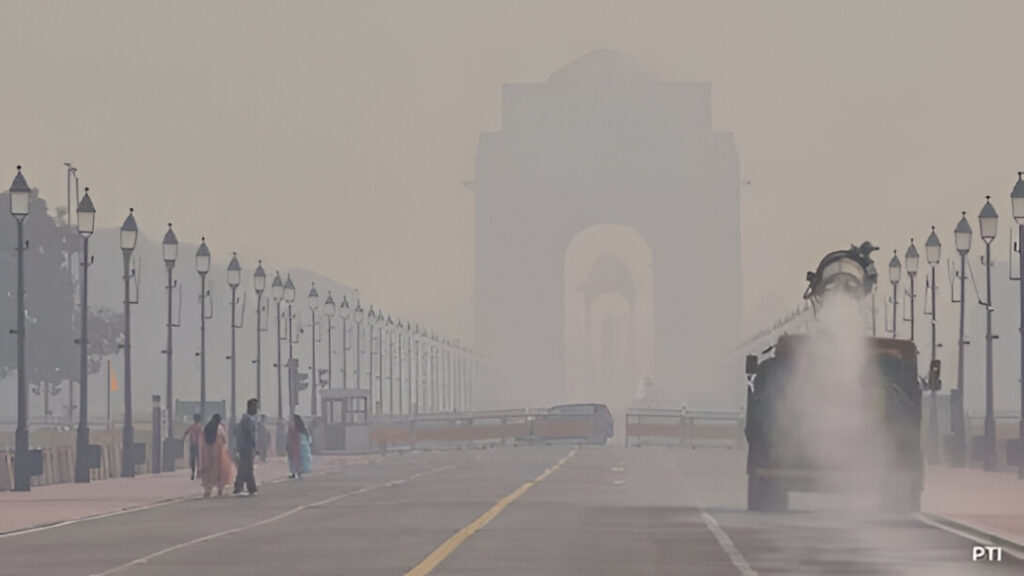
GRAP-3 Restrictions Lifted in Delhi-NCR as Air Quality Improve
The authorities have withdrawn the anti-pollution curbs imposed under Stage 3 of the Graded Response Action Plan (GRAP) in Delhi after a noticeable improvement in air quality, officials said, according to PTI. However, pollution-control measures prescribed under GRAP Stages 1 and 2 will continue to be implemented across the National Capital Region to prevent a fresh deterioration in air conditions.
Delhi’s air quality showed a marked improvement over the past 24 hours, with the Air Quality Index dropping from 380 on Thursday to 236 by 4 pm on Friday, indicating a sustained positive trend, an official said. Considering the improvement in pollution levels, the CAQM Sub-Committee on GRAP has decided to withdraw all restrictions under Stage 3 of the existing GRAP framework with immediate effect across the entire National Capital Region.
The official further clarified that measures prescribed under Stages 1 and 2 of the existing GRAP will continue to be enforced across the National Capital Region.
Meanwhile, Delhi’s air quality remained in the ‘very poor’ category despite a slight improvement, with the Air Quality Index standing at 302 during the morning hours.
19 AQI Stations Fall in ‘Very Poor’ Category
As per the CPCB’s air quality standards, an AQI reading of 0–50 is classified as ‘good’, 51–100 as ‘satisfactory’, 101–200 ‘moderate’, 201–300 ‘poor’, 301–400 ‘very poor’, and 401–500 ‘severe’.
Data available on the Central Pollution Control Board’s SAMEER application indicated that air quality at 19 monitoring locations fell under the ‘very poor’ category, while 15 stations recorded ‘poor’ levels and one slipped into the ‘severe’ bracket.
NSIT Dwarka reported the worst air quality with an AQI of 423. On Thursday, Delhi’s 24-hour average AQI was logged at 380. Meanwhile, the Air Quality Early Warning System has predicted that pollution levels are likely to remain ‘very poor’ until January 4, with similar conditions expected to persist over the next six days.
GRAP-III Action Plan: Restrictions Triggered by Rising AQI
Under Stage 3 of the Graded Response Action Plan, authorities enforced a series of stringent curbs to contain rising pollution levels.
All non-essential construction and demolition work, including activities such as excavation, piling and trenching, was halted. Industrial units like stone crushers, mining operations and hot-mix plants that did not run on cleaner fuel were ordered to shut down.
To reduce vehicular emissions, the movement of BS-III petrol and BS-IV diesel four-wheelers was disallowed in Delhi and neighbouring NCR districts, while the transport of construction materials such as sand and cement was also restricted.
The use of diesel generator sets was prohibited, barring essential and emergency services such as hospitals, airports and metro operations.
Additionally, inter-state diesel buses were barred from entering the capital, private offices were encouraged to follow work-from-home or hybrid arrangements to cut down on traffic, and schools were instructed to conduct online classes for students up to Class 5 to limit children’s exposure to hazardous air.
Related Video: Delhi Pollution | दिल्ली की हवा हुई खतरनाक | Today Air Quality Index | Air Pollution | AQI