
Story by Harshit Uttam I Updated : 28 December
Delhi’s air has turned toxic this winter, with pollution repeatedly hitting the ‘severe’ mark. As the AQI frequently breached 400, officials implemented the toughest restrictions under the Graded Response Action Plan (GRAP-IV) to safeguard public health.
Environment Minister Manjinder Singh Sirsa announced that two GRAP-4 rules have been permanently adopted to address severe air pollution in Delhi.
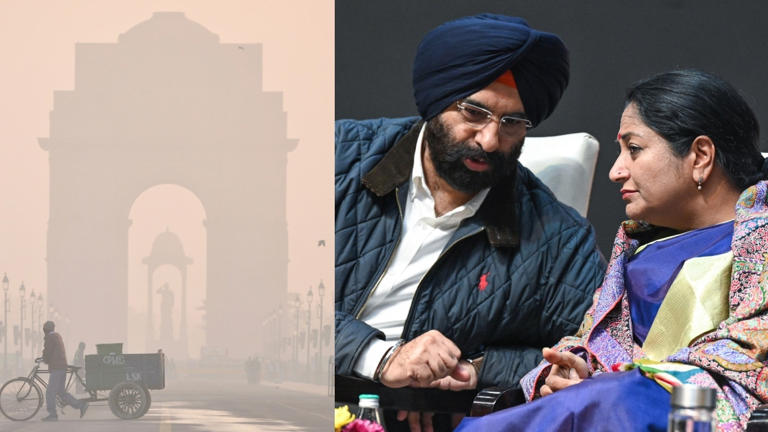
Environment Minister Manjinder Singh Sirsa stated that petrol stations will not supply fuel to vehicles lacking a valid PUCC until further orders. PTI reported that the Delhi government had formalized this measure earlier in the week after a cabinet meeting chaired by Chief Minister Rekha Gupta, requiring all vehicle owners to carry a valid certificate
Sirsa announced on Friday that two GRAP-4 restrictions have been made permanent, the first being PUCC. Petrol will not be supplied to vehicles without a valid PUCC certificate until further notice
Strict entry norms for outside vehicles
Sirsa confirmed that another GRAP-4 restriction will stay permanent: vehicles from outside Delhi that do not comply with Bharat Stage VI (BS6) emission norms will be barred from entering the capital. PTI reported his statement highlighting the enforcement of this rule.

Related video: Breaking: Delhi air pollution worsens as AQI stays in red zone, GRAP-4 curbs fail to bring relief (INDIA TODAY)
According to an HT report, officials confirmed that the two measures will stay in effect irrespective of current air quality levels, with the goal of ensuring long-term compliance and reducing vehicular pollution.
Sirsa previously emphasized that vehicle emissions are a major contributor to Delhi’s air pollution, adding that driving without a valid PUC certificate is akin to committing a crime against the city’s air.
Delhi’s AQI falls in the ‘severe’ category; here’s the area-wise pollution breakdown.
The Central Pollution Control Board (CPCB) reported that Delhi’s air quality remained ‘severe’ on Sunday morning, as AQI readings crossed 400 across multiple parts of the capital, signaling dangerous pollution levels and significant health concerns for residents.
According to data from multiple agencies, Anand Vihar and Shadipur recorded the worst air quality with AQI levels of 445, placing them in the severe category. Other major pollution hotspots included Wazirpur (435), Nehru Nagar (433), Jahangirpuri (432), Narela (431), Ashok Vihar and Vivek Vihar (427 each), Patparganj and Rohini (425 each), along with Okhla Phase-2 and Bawana (423 each).
A few areas showed slight improvement, though air quality remained unsafe. IGI Airport (T3) logged an AQI of 320, Najafgarh 322, IIT Delhi 339, and Aya Nagar 344 — all classified as ‘very poor’