
Story by Bahari Duniya | Written by Ranjan Sharma
Delhi’s Air Quality Threatened Primarily by Vehicles, Study Finds
The long-held view that stubble burning is the main cause of Delhi’s smog is being challenged. New research points to vehicular emissions as the primary culprit, suggesting policy and public attention must now focus on traffic and industrial pollution.
A recent study by the Centre for Science and Environment (CSE) revealed that Delhi’s air quality remained severely polluted even after stubble burning season ended. Surprisingly, the concentration of fine particulate matter (PM2.5) continued to rise in December, indicating that factors beyond crop residue, such as vehicular emissions and industrial activity, are sustaining hazardous pollution levels and contributing to the city’s year-round smog problem.
The research contrasts the “pre-harvest” months of October and November, dominated by stubble burning, with December, when the effect of crop fires diminishes. It found that the post-stubble burning period witnessed widespread, dense smog across the NCR, in some areas even surpassing the severity recorded during the harvest months, the study noted.
The study also highlighted the broader complexity of Delhi’s air pollution, showing that the capital alone is not the main source. Between December 1 and 15, only 35% of PM2.5 originated within Delhi, while the remaining 65% came from surrounding NCR districts and distant regions, underscoring that tackling the city’s smog requires coordinated regional action, not just local measures.
The study emphasized that Delhi’s smog is driven by a mix of local pollution, emissions from surrounding regions, and chemical reactions forming secondary particles. Addressing it, the report said, requires a coordinated regional approach across the entire airshed, along with strict measures to control pollution from vehicles, industries, and other local sources.
The increase in pollution levels was most pronounced in Noida, which recorded a 38% rise, followed by Ballabgarh at 32%, Baghpat at 31%, and Delhi itself, which saw a 29% jump, highlighting the regional spread of air contamination.
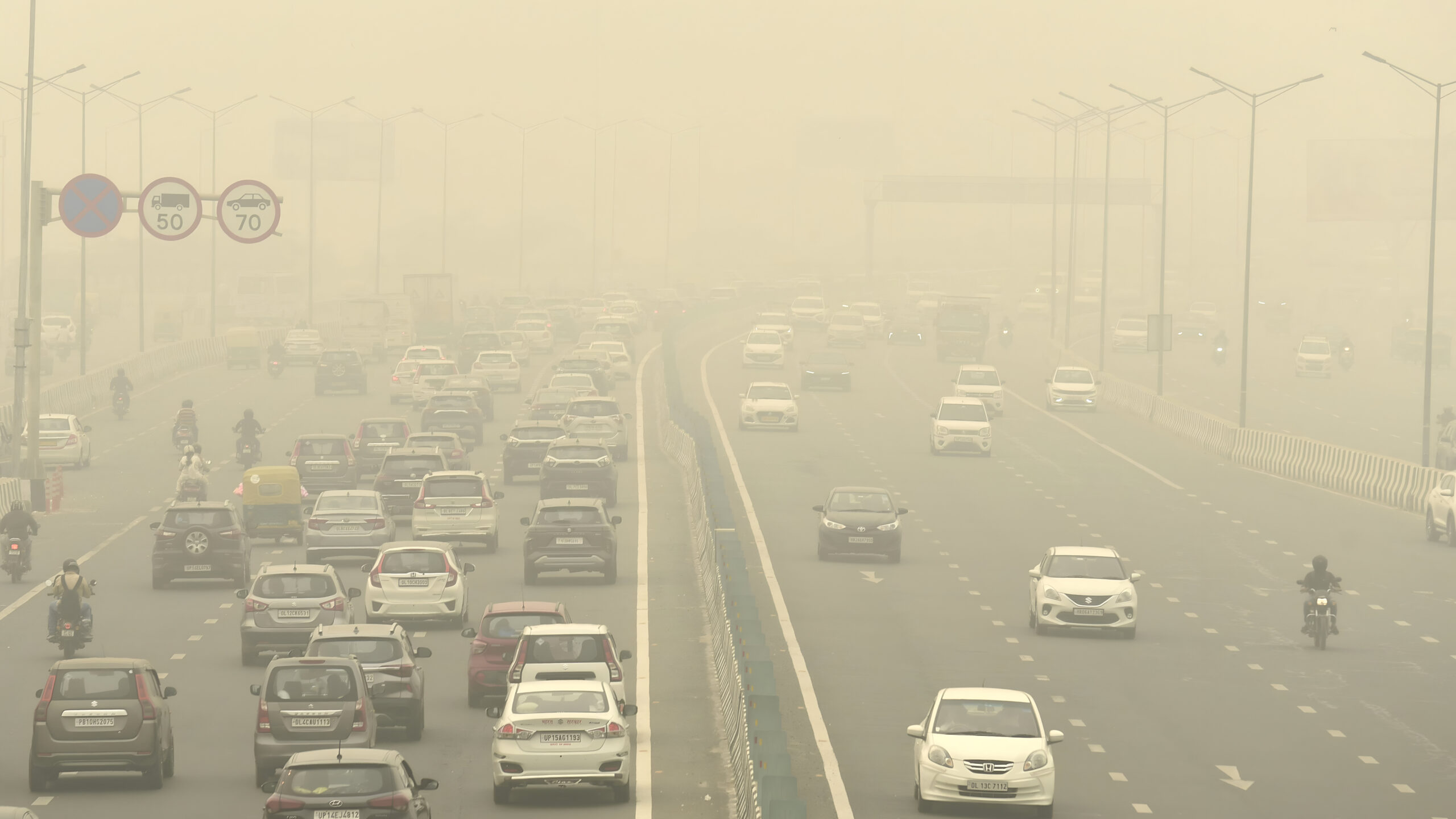
The analysis, using real-time data from active air quality monitoring stations across the NCR, identified vehicular emissions as the leading contributor to Delhi’s elevated PM2.5 levels. Experts noted that traffic-related pollution now outweighs seasonal factors, making transport control a key priority for improving air quality.
“Among Delhi’s local pollution sources, vehicular traffic emerges as the leading contributor, responsible for almost half of all emissions originating within the city,” the study highlighted, emphasizing the urgent need for stricter vehicle emission standards and promotion of cleaner transport alternatives.
Related Video: AAJTAK 2 | DELHI POLLUTION | दिल्ली वालों के लिए बड़ी खबर, प्रदूषण के जल्द मिल सकती है राहत! | AT2
To estimate how much stubble fire smoke affects Delhi’s air, the study relied on data from the Ministry of Earth Sciences’ System of Air Quality and Weather Forecasting and Research (SAFAR), combining it with real-time monitoring to assess the seasonal and regional impact.