
Story by Bahari Duniya | Written by Disha Sharma

Foggy Delhi Mornings Worsen, Metro and Road Traffic Affected as AQI
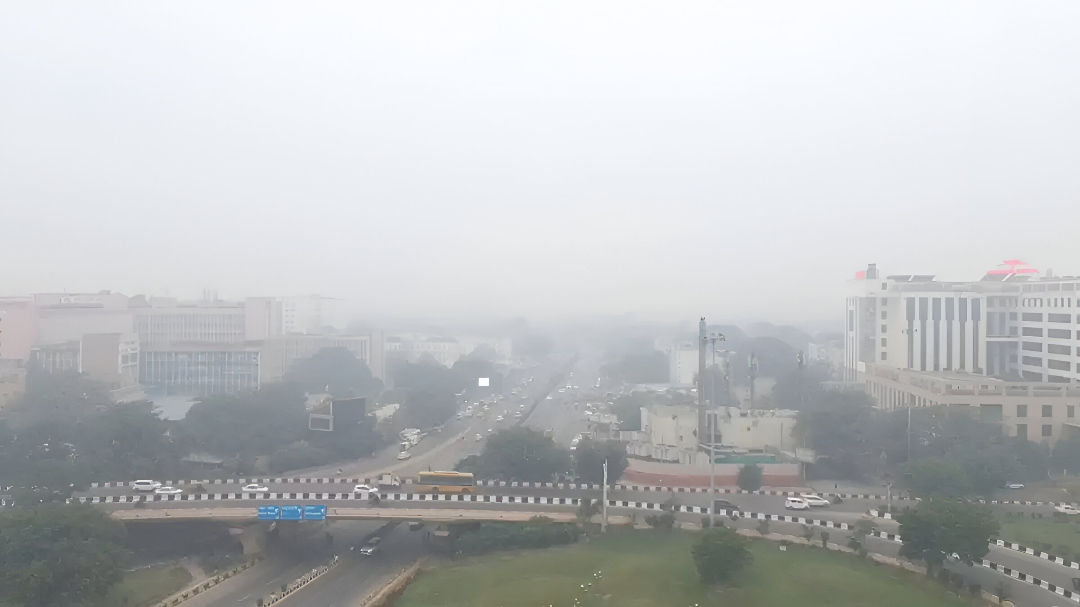
Delhi woke to a heavy shroud of fog and smog on Friday, drastically reducing visibility and disrupting normal life across the city. Commuters faced delays as train services were slowed, leaving many stranded at New Delhi Railway Station amid the biting winter cold. Early morning images captured a grey haze hanging over major roads and residential areas, while air quality worsened after a brief improvement earlier in the week. By afternoon, pollution levels had fallen back into the “very poor” category, with meteorologists warning that lingering weather conditions could keep the air quality dangerously low in the days ahead.
Thick Fog Hits Delhi, Trains and Roads Affected
Early morning visuals from Kartavya Path revealed Delhi cloaked in a thick fog. Near Rajghat, locals huddled around bonfires to ward off the chill, as cold air combined with rising pollution. Comparable conditions were observed across residential neighborhoods and major thoroughfares, causing traffic slowdowns and increasing commuter discomfort throughout the city.
Delhi Faces Severe Pollution, Daily Life Disrupted
Air quality readings across Delhi continued to cause concern. At Dhaula Kuan, the AQI registered 245, falling in the “poor” category, according to the Central Pollution Control Board. Other areas fared far worse: Akshardham and Anand Vihar recorded “severe” pollution at 412, while ITO logged 381, classified as “very poor”. Around India Gate, the AQI stood at 308.
By Friday afternoon, Delhi’s 24-hour average AQI worsened to 335, firmly in the “very poor” range, rising from 236 on Thursday. Out of 38 active monitoring stations, eight reported “severe” pollution above 400, including Anand Vihar, Bawana, DTU, Jahangirpuri, Narela, Nehru Nagar, Rohini, and Vivek Vihar. Twenty stations remained in the “very poor” category, while nine were classified as “poor”.
Sources of Pollution & City Air Outlook
Data from the Decision Support System for Air Quality Management indicated that vehicular emissions remained the leading contributor to Delhi’s pollution earlier this week, accounting for 20.1 per cent, followed by industrial sources at 10.3 per cent and residential emissions at 5.2 per cent.
Within the NCR region, Ghaziabad recorded the highest contribution at 19.8 per cent. Forecasts indicate that Delhi’s air quality is expected to remain in the “very poor” category over the next week, with the India Meteorological Department warning of continued dense fog. The city experienced a high of 22.1°C and a low of 7.9°C, with humidity levels ranging from 65 to 99 per cent.
Related Video: Delhi Pollution: Severe AQI and Dense Fog Days After GRAP-4 Revoked | India Today